First-Party Multi-Touch Attribution
Multi-Touch Attribution You Can Actually Trust
Convertmax multi-touch attribution is first-party software that assigns closed revenue to every campaign, call, page, and CRM event in a customer journey—not only the last click.
- Capture visits, sources, and conversions from data you collect on owned properties
- Stitch anonymous research to known contacts, calls, and revenue
- Compare first-touch, last-touch, linear, U-shaped, time-decay, and data-driven models side by side
First-party data
Build attribution from data collected on your owned properties instead of trusting platform-reported exports.
Identity resolution
Connect anonymous and known sessions so early research and return visits stay part of the journey.
Model comparison
Compare first-touch, last-touch, linear, U-shaped, time-decay, and data-driven attribution side by side.
Revenue visibility
See which touchpoints influenced conversions and revenue instead of stopping at clicks or form fills.
Visualize the journey
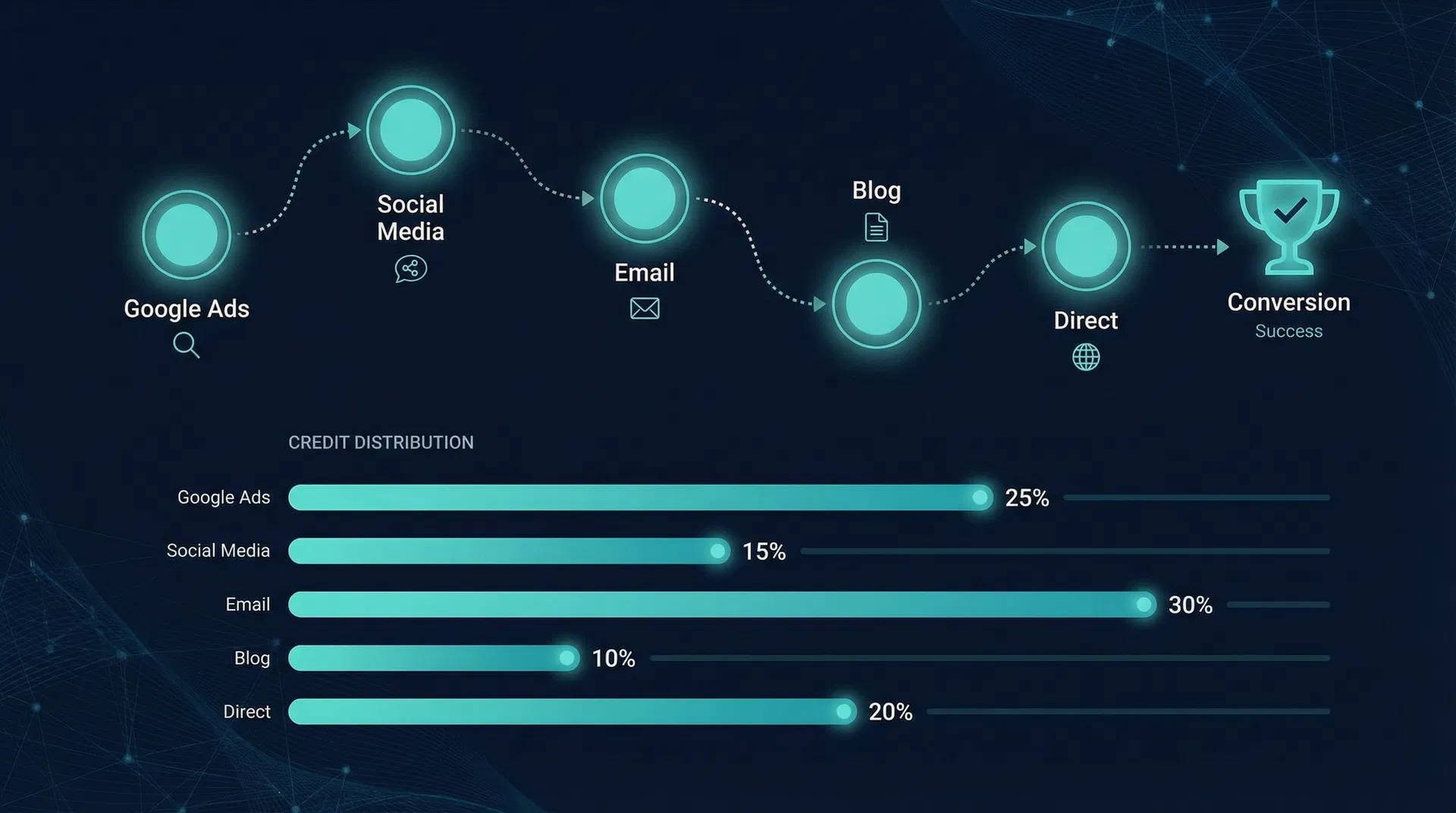
See How Credit Is Distributed Across the Customer Journey
The same conversion can look very different depending on which touchpoints created demand, accelerated intent, and closed the deal. This is where first-party attribution becomes easier to trust than isolated platform reports.
The problem
Your Attribution Is Only as Reliable as the Data Behind It
Most marketing reporting was not built for the way people actually buy. Ad platforms over-credit their own campaigns, last-click analytics ignore the journey that created intent, and CRM reports often start too late. Convertmax fixes the inputs first so attribution can become something your team can actually use.
Last-click reporting
Closing channels get too much credit while demand creation disappears from budget decisions.
Convertmax response: Multi-touch models distribute credit across the full path to conversion.
Platform-reported conversions
Every ad platform claims too much credit for the same customer.
Convertmax response: Convertmax becomes a neutral, first-party source of truth.
Anonymous visitor gaps
Pre-conversion research vanishes before it can influence reporting.
Convertmax response: Identity stitching connects early sessions to later conversions and revenue.
Signal loss from blockers and privacy controls
Performance becomes harder to trust when third-party tracking breaks.
Convertmax response: First-party collection and server-side resilience preserve more of the journey.
Workflow
From First Visit to Revenue Credit
Convertmax attribution works like an operating system for the customer journey. It starts with first-party events, connects touchpoints into a single path, and applies the right model for the question your team is trying to answer.
1. Capture
Collect first-party journey data
Record visits, sources, campaigns, content interactions, conversions, and revenue events from owned properties.
2. Resolve
Connect anonymous and known touchpoints
Join sessions across time so the story starts before a visitor fills out a form or makes a purchase.
3. Model
Apply the attribution model that matches the decision
Compare multiple models to understand how different assumptions change channel and campaign credit.
4. Analyze
See influence by channel, campaign, and touchpoint
Surface assists, demand creation, closing influence, and revenue contribution in one view.
What you can answer
Turn attribution into useful decisions
- Which campaigns started the journeys that became customers?
- Which channels assisted conversions but rarely win last-click credit?
- Which campaigns look good in-platform but fail to generate revenue?
- Which pages or offers influence conversion before a visitor identifies?
Next step after attribution
Once you trust the journey and the credit, the next question is where to invest, what to cut, and how to scale profitable growth. If you are still answering “where did this lead come from,” start with lead attribution.
Model comparison
Choose the Attribution Model That Matches the Decision
There is no single model that answers every marketing question. Convertmax makes model comparison practical, so teams can understand where demand is created, where conversions are closed, and how channel value changes across different assumptions.
| Model | What it answers | Best use case |
|---|---|---|
| First-Touch | Which channels create initial demand? | Awareness, content, SEO, and net-new audience acquisition. |
| Last-Touch | Which channels close conversions? | Retargeting, branded search, email, and conversion optimization. |
| Linear | Which touches contributed across the full path? | Balanced reporting across longer customer journeys. |
| U-Shaped | Which touches created the opportunity and closed it? | Lead generation and multi-step funnels. |
| Time-Decay | Which recent touches accelerated conversion? | Shorter sales cycles and remarketing analysis. |
| Data-Driven | Which patterns most consistently predict outcomes? | Higher-volume teams with enough data for algorithmic weighting. |
FAQ
Attribution questions
How multi-touch models, first-party data, and Convertmax fit alongside GA4 and ad-platform reporting.
What is multi-touch attribution?
Multi-touch attribution distributes conversion and revenue credit across the customer journey instead of giving all credit to the last click. It helps you see which campaigns create demand, which assist, and which close—so budget decisions reflect the full path to revenue.
How does Convertmax improve on last-click reporting?
Last-click over-credits closing channels and hides demand creation. Convertmax captures first-party journey data, resolves identity across anonymous and known sessions, and lets you compare models so assists and early touchpoints stay visible in reporting.
Which attribution models does Convertmax support?
Convertmax supports first-touch, last-touch, linear, U-shaped, time-decay, and data-driven models side by side. Model comparison makes it practical to pick the model that matches the decision—awareness, closing, or balanced path credit—without locking into a single assumption.
Does Convertmax replace GA4?
Not necessarily. GA4 can remain useful for product and site analytics. Convertmax targets the cross-system gap: anonymous visits before the CRM, platform over-crediting, calls, identity continuity, and revenue outcomes after the lead—so you can answer questions that usually require manual exports.
Why does first-party data matter for attribution?
Third-party cookies, blockers, and platform-reported conversions create gaps and conflicting credit. First-party collection on your owned properties improves ownership and resilience, then identity resolution connects early research sessions to later conversions and revenue.
Ready for the next layer?
See Which Marketing Touchpoints Actually Drive Revenue
Convertmax gives you first-party attribution that connects the full customer journey to conversion and revenue outcomes. Start with trustworthy measurement, then move into revenue decisions with confidence.