By Elena Marsh
SEO Pipeline in 90 Days Still Needs a Revenue Path
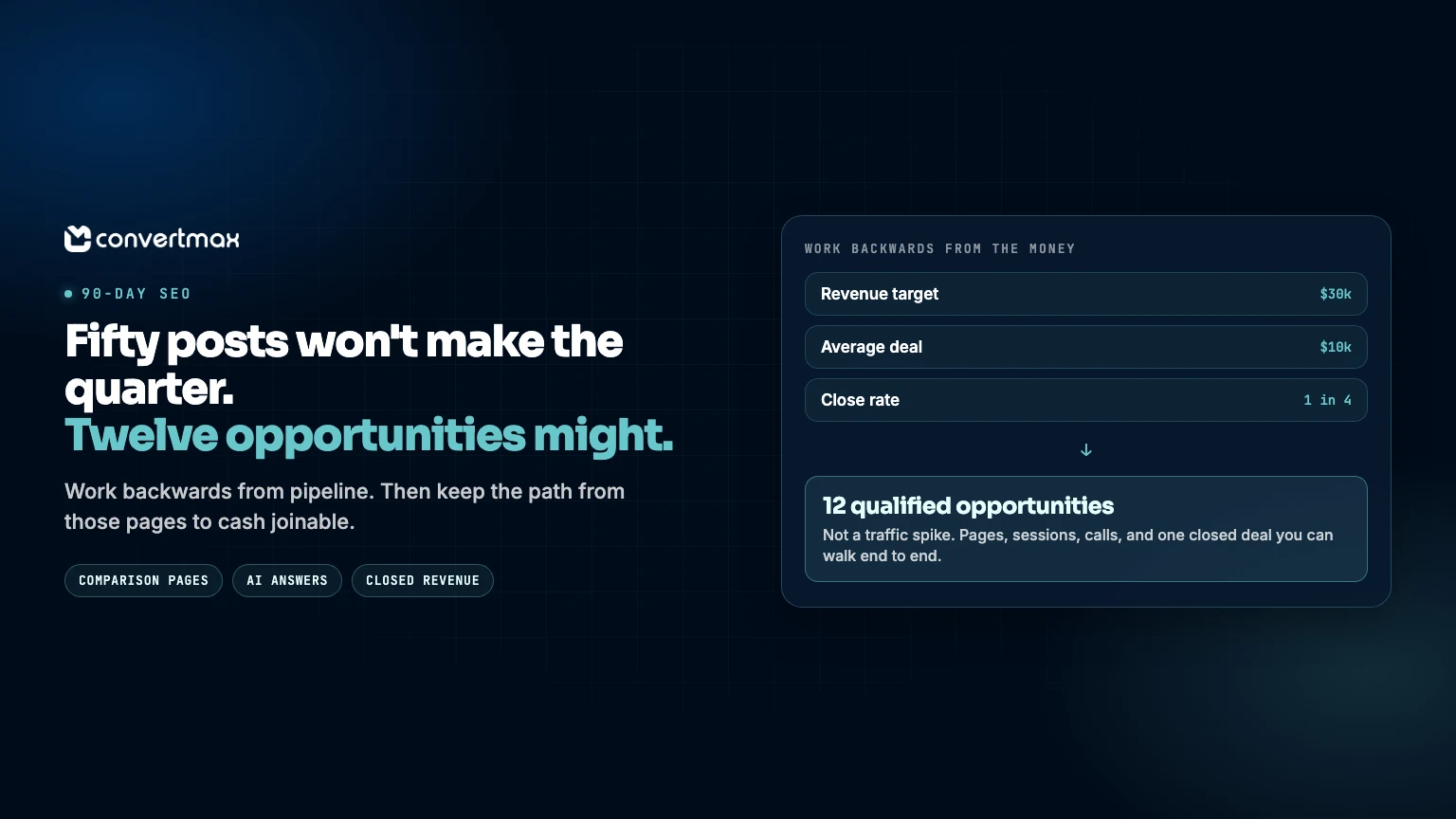
Say leadership wants $30k in closed revenue from SEO, and they want it inside a quarter. Publishing fifty posts is not the answer.
Working backwards from the money is.
Run the arithmetic. Average deal sits at $10k, you close one in four qualified opportunities, so you need about twelve real opportunities. Not a traffic spike. Twelve. The plan that gets you there leans on comparison pages, competitor alternatives, integration searches, and pages already sitting at the edge of page one. Those move faster than a blank content calendar ever will.
What most 90-day plans still leave out is the layer that proves which of those pages actually produced pipeline. And which ones just produced visits.
Traffic is not the target. Pipeline is.
High-intent search is a commercial bet, and it should be priced like one. Somebody comparing tools, hunting for an alternative, or checking whether you integrate with their stack is a lot closer to a sales conversation than somebody who wanted a definition.
So build the plan out of sales reality instead of keyword volume:
- The competitors prospects keep naming on calls
- Why they say they want to switch
- What they need solved this quarter
- The integrations and features they ask about
- The objections that stall deals
Turn each of those into a page that answers a buying question. Then go back to the pages that already pull a little attention without producing enquiries and fix them: sharper offer, customer proof, the buyer's real questions answered, next step impossible to miss.
That's a workable 90-day plan. It also fails the first week leadership asks a different question. Which pages created qualified opportunities, and which ones closed?
"How did you hear about us?" is not a journey
A serious sprint tracks more than rankings:
- The first page each qualified lead visited
- Which pages helped create pipeline
- How many leads turned into opportunities
- What prospects typed into the "how did you hear about us" box
- The whole route they took before they booked
That last one is where most stacks fall apart.
Picture three prospects. One finds you in ChatGPT, comes back three days later by typing your name into the browser, and lands in analytics as direct. Another reads your comparison page, calls from a mobile number, and shows up in the CRM as a contact with no campaign attached and no session history. A third fills out a form after weeks of anonymous visits that never got tied to the person who finally booked.
Self-reported source fields are useful color. They're not a substitute for a joined path that runs from first-party sessions through to opportunity and cash.
AI search makes the dark funnel louder
Your 90-day plan now includes getting mentioned in AI answers: Google, ChatGPT, Claude, Perplexity, and the review sites and roundups that keep surfacing whenever buyers ask their questions.
That's distribution. It's also a measurement problem.
When an answer engine sends someone who converts later with no clean referrer, classic channel reports under-credit the work. Then teams cut the pages and the outreach that created the demand in the first place, because the last label said direct, branded search, or sales-sourced.
A prettier UTM sheet won't fix that. Keeping the anonymous journey intact until a reliable identity key shows up will. Form fill, call, CRM contact, authenticated session. Whichever comes first, follow the thread from there into opportunity and revenue.
Without that join, "SEO produced pipeline" stays an argument. With it, you can pull one closed deal and show the pages, sessions, and calls that created it.
What to measure by day 90
When a forced sprint ends, don't settle for "we published and rankings moved."
Ask for a short revenue path review:
- The first meaningful page for each qualified opportunity created in the window. Not just the last page before the form.
- Assisting pages that showed up again and again on deals that reached opportunity or closed-won.
- Calls and meetings attached to the same person as the site sessions, not parked in a separate tracker.
- AI and referral dark paths where self-report mentions AI discovery but analytics only shows direct.
- One invoice or closed opportunity walked end to end: entry point, session, person, sales activity, cash.
Miss that fifth item and you still have an SEO content plan. You don't have an SEO revenue system yet.
Where Convertmax fits
Convertmax doesn't replace your CMS, your Claude subscription, or the publisher outreach that gets you onto comparison lists. It connects first-party journeys to CRM and commerce outcomes, so the 90-day bet gets judged on pipeline and revenue instead of traffic and form fills.
Concretely:
- Anonymous sessions stay available until identity can be resolved responsibly
- Calls and CRM stages attach to the same path
- Multi-touch views get compared as lenses, not treated as one "true" percentage model
- You can answer which comparison and alternatives pages influenced opportunities that actually closed
Work backwards from pipeline. Build the high-intent pages. Get into the AI answers and review surfaces buyers already trust.
Then make sure the route from those pages to cash is joinable. Otherwise the next 90-day plan starts from the same fog.
Book a Convertmax demo or get a free revenue and attribution audit when SEO and AI discovery are creating interest you still can't defend in a pipeline meeting.